


Keep Balcony Plants Thriving in Wind and Full Sun

Balcony gardens in strong wind and blazing sunlight can thrive with thoughtful watering and irrigation strategies. Today, we’re exploring watering and irrigation strategies for windy, sun‑exposed balconies, translating horticultural know‑how into simple habits, resilient setups, and gentle rituals your plants will love. Expect practical timing tips, clever drip options without a hose, moisture‑holding soils, and neighbor‑friendly runoff control. Share questions, photos, and balcony orientation in the comments so we can tailor guidance and celebrate your successes together.

Know Your Balcony’s Microclimate

Wind accelerates evaporation, sun bakes pots, and reflective surfaces magnify heat, especially on higher floors and south‑ or west‑facing exposures. Map gust patterns across the day, notice how shadows migrate, and feel pot temperature at noon and late afternoon. Understanding these rhythms turns guesswork into confident care, steadier moisture, and fewer stressed leaves. Take notes for a week; small observations power big, water‑saving adjustments you can trust.

Watering Timing and Frequency That Actually Works

Consistent moisture beats heroic rescue pour‑overs. In windy, sun‑drenched conditions, early morning deep watering prepares plants for the hottest hours, while targeted evening top‑ups can help during heatwaves. Frequency depends on pot size, mix, plant type, and wind exposure. Create a rhythm anchored to weather cues, not arbitrary schedules, and refine it weekly. Your plants will reward steady habits with sturdier growth, fewer wilt cycles, and better blooms or harvests.

Dawn Deep Soaks vs. Evening Top‑Ups

Morning watering saturates root zones before heat and wind ramp up, reducing mid‑day stress and run‑off. Let water percolate, return after a few minutes, and water again for a true deep soak. On roasting days, a brief evening top‑up can stabilize containers without encouraging disease, especially in breezy conditions that dry leaves quickly. Use this as an exception during heat spikes, prioritizing mornings for your primary, thorough irrigation.

The Finger Test, Weight Test, and Meter Sanity‑Check

Insert a finger two knuckles deep to gauge moisture where roots actually drink. Lift smaller pots to feel weight shifts; practice until differences become second nature. Moisture meters can help, but calibrate them against your senses and specific mix. Combine all three checks for a reliable picture, then water only when needed. This simple toolkit prevents overwatering, preserves nutrients, and ensures every liter reaches roots that are ready to absorb.

Gravity Reservoirs and Battery Timers

A sealed reservoir on a sturdy shelf can feed drippers via gravity when coupled with a reliable timer and flow controller. Keep outlets slightly above pot rims to prevent siphoning, and secure everything against wind. Use food‑grade containers with tight lids to block debris and insects. Test run times for each line, then label zones clearly. This minimalist system reliably sustains balconies where spigots and power outlets are out of reach.

Micro‑Drip Layouts for Railings and Planter Boxes

Run a main micro‑tube discreetly along the railing or behind planters, branching with short lengths to each pot. Start with pressure‑compensating emitters, mixing low‑flow drippers for succulents and higher outputs for thirstier plants. Anchor lines with clips, hide them under mulch, and leave a small service loop near each container. After installation, observe wetting patterns and tweak emitter sizes until every pot receives even, predictable hydration despite wind and sun.

Self‑Watering Planters and Capillary Wicks

Built‑in reservoirs and wicking systems hold water below soil, drawing moisture upward as roots need it. They excel on windy balconies by minimizing exposed wet surfaces and reducing evaporation. Choose designs with accessible fill tubes, overflow controls, and easy‑to‑clean reservoirs. Refresh wicks seasonally, scrub algae, and monitor salts by occasionally flushing with clear water. Pair with a moisture‑retentive mix to extend intervals between refills without drowning delicate root systems.

Soil Mixes, Containers, and Mulch That Hold Moisture

Your potting blend, container choice, and mulch can dramatically extend hydration in relentless sun and wind. Aim for a mix that drains freely yet retains water within organic fibers. Favor lighter‑colored, insulated containers that resist heat spikes. Top everything with mulch to block evaporative loss and moderate surface temperatures. Thoughtful material choices reduce watering frequency, protect microbial life, and keep roots comfortably oxygenated, turning each irrigation into longer‑lasting, plant‑friendly moisture.

Water‑Retentive Potting Blends

Blend high‑quality potting mix with coconut coir for sponge‑like water storage, compost for nutrients, and perlite or pumice for structure. This balance holds moisture without suffocating roots. Avoid garden soil, which compacts in containers. Hydrogels can help but may degrade under intense heat; rely on organic components first. Pre‑moisten mixes before potting to prevent initial runoff, and top up compost gently through the season to sustain moisture‑holding capacity.

Container Color, Material, and Size

Light‑colored, double‑walled, or glazed containers reflect heat and insulate root zones, while thin, dark plastic and bare metal cook quickly in direct sun. Terracotta breathes beautifully but dries fastest in wind; line inner walls or choose larger sizes to compensate. Bigger volumes buffer moisture better, reduce watering frequency, and stabilize temperatures. Choose shapes that resist tipping gusts, and consider wheeled stands for easy rotation and microclimate fine‑tuning.

Mulches That Beat Wind and Sun

A two‑to‑three‑centimeter layer of fine bark, cocoa hulls, or straw slows evaporation and shields soil from scorching sunlight. In strong wind, top with a decorative mesh or intermix a few pebbles to keep mulch in place. Light gravel reflects heat away but can warm roots if too thick, so use sparingly. Living mulches like creeping thyme add charm, fragrance, and modest cooling while still allowing irrigation to reach the root zone.

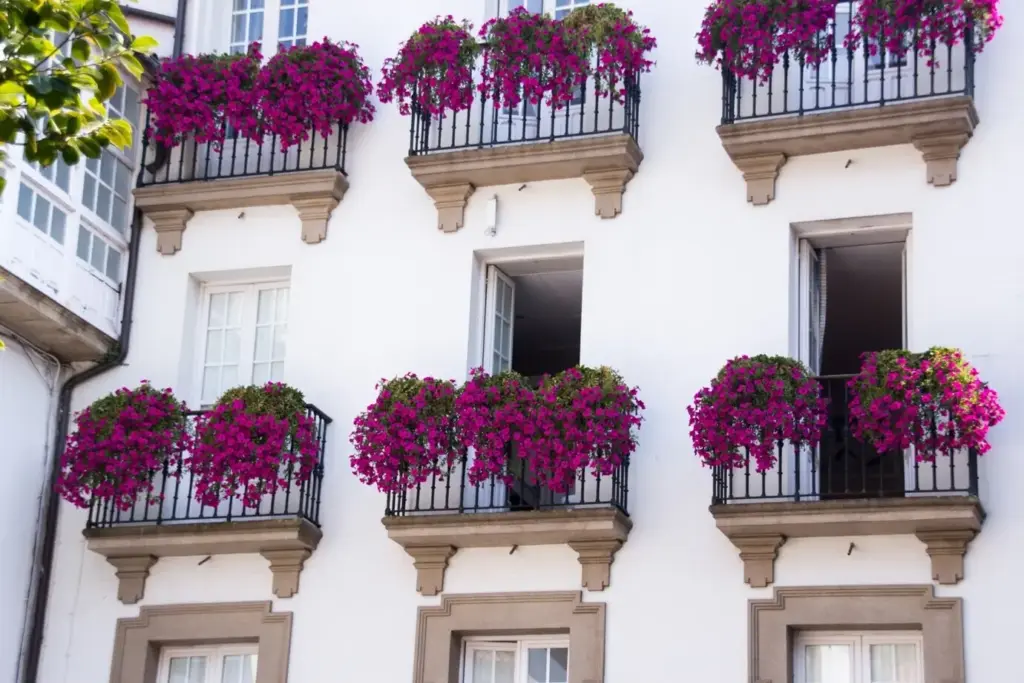
Shielding From Wind and Scorch Without Losing Light

You can tame harsh exposure with subtle barriers that preserve brightness. Breathable meshes slow gusts, and shade cloths filter intense rays during peak hours without starving plants. Grouping pots builds a cooler core while creating self‑made windbreaks. Strategic shielding reduces transpiration, protects blooms, and makes every watering count. Aim for adjustable solutions you can reposition seasonally, letting your garden adapt gracefully as the sun’s angle and wind corridors change.

Water Sourcing, Conservation, and Responsibility

Runoff, Neighbors, and Balcony Safety

Thoughtful watering includes clean boundaries. Prevent drips onto balconies below, anchor reservoirs and lines securely, and respect structural load limits. Choose saucers and trays designed to catch overflow without stagnation, and use absorbent mats where needed. Train yourself to water slowly, allowing soil to absorb rather than shed. These habits build trust with neighbors and property managers while letting you garden boldly in bright, breezy conditions without fear of mess or mishap.

Tough Edibles and Fragrant Companions

Choose herbs like rosemary, thyme, sage, and oregano that relish sun and tolerate gusts, pairing them with chilies and cherry tomatoes in larger containers for steadier moisture. Give edibles a dedicated line with slightly higher flow. Prune to reduce wind sail and encourage compact forms. With careful spacing and mulching, these plants provide harvests without demanding constant refills, even during the most relentless bright, breezy afternoons.

Ornamentals for Bright, Breezy Spots

Consider lantana, portulaca, gazania, and verbena for color that laughs at heat. Add grasses like pennisetum for movement that tolerates wind. Succulents thrive too, but keep them on a low‑flow zone to prevent rot. Use contrasting textures to build a layered look that also protects soil surfaces. These choices maintain beauty through sizzling days while letting your irrigation run lean, precise, and confidently spaced apart.
Zamonexonuvavotuzazafe
Privacy Overview

This website uses cookies so that we can provide you with the best user experience possible. Cookie information is stored in your browser and performs functions such as recognising you when you return to our website and helping our team to understand which sections of the website you find most interesting and useful.